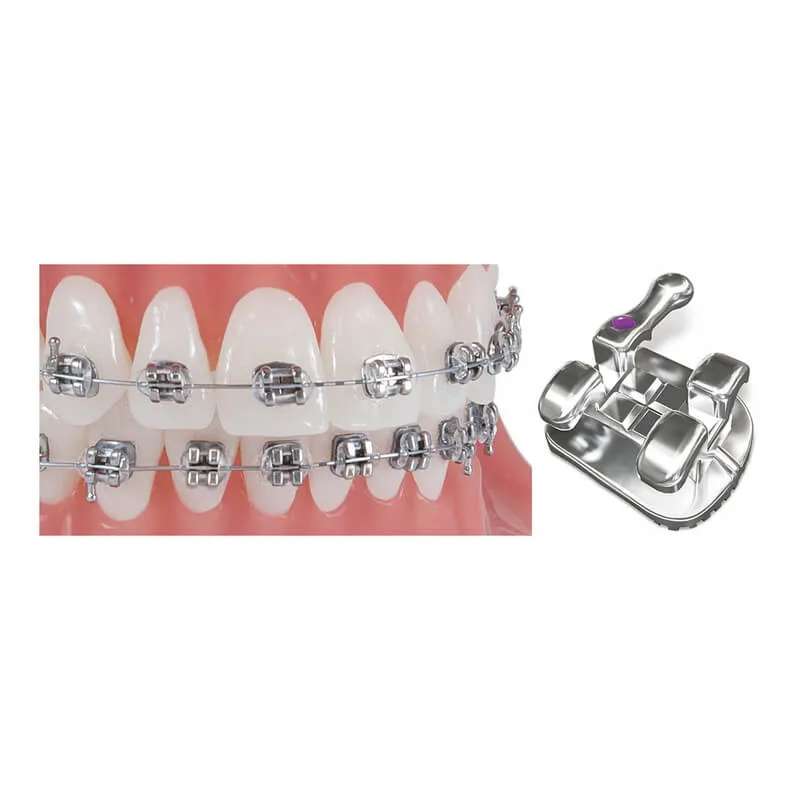
Orthodontic bracket prescription is the set of tip, torque and in-out values built into a bracket so that a straight archwire delivers the tooth positions you want. Since Andrews introduced the straight-wire appliance, those built-in values have been repackaged into competing prescriptions — Roth and MBT above all — and the choice between them changes how you finish a case. This guide explains what tip, torque and in-out actually do, then compares Roth and MBT directly and covers slot size selection.
Roth vs MBT: The Practical Comparison
Both Roth and MBT are refinements of Andrews' original straight-wire prescription, and both aim to reduce the wire bending needed to finish a case. They differ in how much correction is pre-built into the bracket and in what they assume about your mechanics.
Roth (Ronald Roth, mid-1970s) added overcorrection to Andrews' values so that teeth would settle into a gnathologically sound position once appliances were removed. It carries generous tip, particularly on canines, and was designed around finishing with full-size wires.
MBT (McLaughlin, Bennett and Trevisi, late 1990s) was built around sliding mechanics and lighter forces. It reduces anterior tip — the canine value most noticeably — because high tip in a sliding system drives unwanted mesial crown movement and consumes anchorage. It compensates with increased labial root torque on the upper incisors and adds lingual crown torque to lower posteriors.
| Feature | Roth | MBT |
|---|
| Origin | Roth, mid-1970s; overcorrected Andrews | McLaughlin, Bennett & Trevisi, late 1990s |
| Anterior tip | Higher, especially the canines | Reduced, to protect anchorage |
| Upper incisor torque | Moderate | Increased labial root torque |
| Lower posterior torque | Standard | Added lingual crown torque |
| Designed around | Finishing with full-size wires | Sliding mechanics and light forces |
| Anchorage demand | Higher in extraction cases | Lower, by design |
| Typical use | Non-extraction and detail finishing | Extraction cases and space closure |
Two caveats matter more than the table. First, exact values vary between manufacturers — one company's "Roth" is not always numerically identical to another's, so check the prescription chart for the brackets you actually buy. Second, neither system finishes a case on its own: expression depends on slot size, wire size, play and how well the brackets are positioned.
In practice many clinicians run a single prescription and adapt with wire bending, while others mix — for example preferring Roth brackets on upper second premolars for their in-out behaviour. Both approaches are legitimate.
SOUQ DENTAL stocks both systems in metal and ceramic: Mini Low Profile MBT Bracket Set 022, Easy Clip+ MBT Passive 022 and TransLux Ceramic MBT 022 on the MBT side; Mini Low Profile Roth 022, Roth Vector+ Passive 022, Roth One Piece 022 and TransLux Ceramic Roth 022 on the Roth side.
Bracket Tip
When it comes to orthodontic brackets, understanding the intricacies and nuances of their design can significantly influence the success of treatment. One of these crucial factors is the "tip", and here's a breakdown:
The Basics of Tip:
The tip refers to the relationship between the wire and the bracket.
It dictates how a tooth will be angled, either medially or distally.
Adjustments to this tipping are achieved by altering the slot's relationship to the bracket.
Variations can range from 0 up to 13 degrees.
Why Tip Matters:
Every tooth has its unique amount of tip, which differentiates from others.
Differences between the Roth and MBT prescriptions highlight the importance of the tip. For instance, most of the tip is seen in anterior teeth like incisors and canines, whereas premolars and molars have little to no tip.
The MBT prescription has less tip compared to Roth, which can influence the treatment outcome.
The Mechanism of Tip:
When a wire bends against a bracket, it produces force. This force, coupled with the bracket's width (or the length of the arm), results in momentum that will tip the tooth in the desired direction.
Factors Affecting Tip:
Archwire Stiffness: A stiffer wire produces more force, leading to more tipping.
Bracket Width: Wider brackets offer more control over tipping. Hence, in cases where tipping is crucial, wider brackets are preferred. Narrower brackets might be aesthetic and easier to clean but might provide less control.
Archwire Size: While the size of the wire is essential for the force it delivers, it's the stiffness of the wire that plays a more significant role in tipping.
Tip in Practice:
When leveling teeth, especially in non-extraction cases, excessive tipping can lead to unwanted mesial movement of canine crowns. Lace-backs can be used to prevent this unwanted movement by binding the molar, premolar, and canine.
In extraction cases where canines are retracted, distal tipping often occurs. Using Roth brackets with built-in tip can be beneficial in these cases to maintain the desired alignment.
Whether you're using Roth or MBT brackets, having the right prescription can make a significant difference in the outcome. Always consider the specific needs of the case and the unique characteristics of the teeth involved to achieve the best results.
Bracket Torque
Torque: This is the force responsible for rotating the tooth either buccally or lingually. Positive torque involves pushing the root lingually and the crown labially, while negative torque is the reverse.
Bracket Torque: When comparing Roth and MBT systems, all teeth have negative torque except for the upper incisors. In the MBT system, there's increased torque in the upper incisors.
Torque in Brackets: The faces of the brackets appear the same, but the key difference lies in the angle of the base. The torque works similarly to tip, but requires more force due to the smaller length of the arm in the bracket.
Factors Influencing Torque: These include:
Archwire stiffness: A stiffer wire, like stainless steel, generates more force than a NiTi wire.
Play: The gap between the bracket slot and the wire. This can lead to inefficiencies in torque expression.
Archwire size: The more the wire fits into the slot, the better the torque expression.
Depth of Slot: Generally, an 0.028 or 0.030 depth is preferred.
Slot size: An 18 slot bracket offers more precision for torque but compromises on wire stiffness. Conversely, a 22 slot with a 0.019 x 0.025 stainless steel wire offers good stiffness but with more play.
Overcorrection: Due to the play in the brackets, one may need to overcorrect torque by around 20 degrees, as 10 degrees is already lost due to the play.
Clinical Judgement: To ensure the desired movement, it might be necessary to use different bracket systems on different teeth based on the individual's needs.
In essence, achieving the right torque is a delicate balance of the right wire stiffness, slot depth, and size. Moreover, individualized treatment strategies and overcorrection can be important to achieve the desired tooth position.
Torque expression is only as good as the wire in the slot. Working archwires in stainless steel express far more torque than the NiTi wires used for initial alignment, which is why finishing is normally done on a rectangular steel wire.
Other Bracket Key Points
In-Out Widths of Brackets:
Most brackets have the same in-out widths.
Exceptions are the upper second premolars in the MBT system and lower incisors, which are 0.5 millimeters wider.
The width variations help in achieving proper alignment and canine prominence.
Upper Second Premolars:
They might be smaller, necessitating pushing them lingually.
There's a preference for using brackets from the Roth system for these teeth due to their reliability.
Considerations in Bracket Selection:
If using a lower incisor bracket on an upper tooth, consider the in-out depth.
The upper lateral incisor often requires a thicker bracket to achieve the desired positioning relative to the central incisors.
Bracket Rotation:
Brackets usually have equal arms.
Some, especially those designed by Andrews, incorporate rotation.
While manufacturers rarely incorporate rotation in brackets today, it's common for molar buckle tubes.
Proper bracket positioning can counteract undesired tooth rotations.
Bracket Slot Size:
18 slot brackets: Easier full engagement, excellent for torque expression with stainless steel wires, and suitable for non-extraction cases.
22 slot brackets: Allow for greater play and are suitable for stiffer wires, making them useful in extraction cases. The larger slot aids in sliding mechanics.
Slot size influences torque much more than tip.
Choosing a Slot Size: .018 or .022
The prescription decides the built-in values; the slot decides how much of them you can actually express.
Self-ligating designs change the ligation method rather than the prescription itself, and are stocked in passive form as Easy Clip+ Passive 022 Damon Standard and Easy Clip+ Passive Damon Low Torque 022.
Common Questions
What is the main difference between MBT and Roth prescription?
MBT carries less anterior tip — the canine especially — and more labial root torque on the upper incisors, because it was designed for sliding mechanics where high tip costs anchorage. Roth carries more built-in tip and overcorrection, designed to settle teeth into a gnathologic position after debonding.
Which prescription is better for extraction cases?
MBT is generally preferred, precisely because its reduced tip places lower demand on anchorage during space closure. Roth remains popular for non-extraction treatment and detailed finishing.
Does bracket prescription matter more than bracket positioning?
No. A prescription only expresses what the bracket's position on the tooth allows. A misplaced bracket defeats any prescription, which is why bracket placement is the single highest-value step in straight-wire treatment.
Can Roth and MBT brackets be mixed in one case?
Yes, and it is done deliberately — for example choosing one system's upper second premolar bracket for its in-out value. It requires you to know both prescription charts rather than assuming they interchange.
Why is my torque not expressing?
Almost always play. A round or undersized wire in a .022 slot cannot deliver torque no matter what the bracket promises; you need a rectangular wire close to full size, in a stiff enough alloy, and enough time in that wire.
Where to Buy Orthodontic Brackets
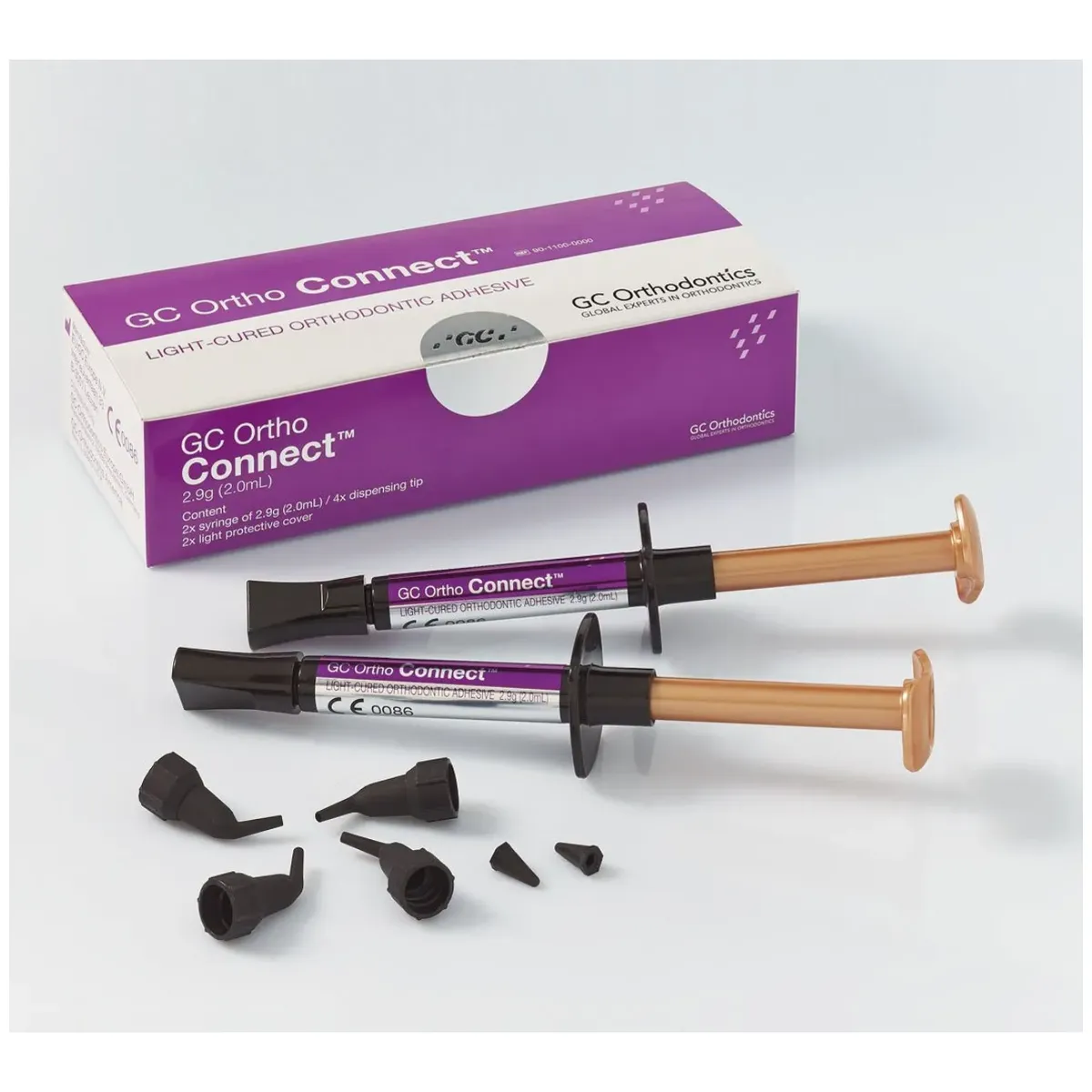
SOUQ DENTAL carries Roth and MBT brackets in metal, ceramic and self-ligating designs, in both .018 and .022 slots, as single-patient kits and bulk packs — alongside the archwires, elastic ties and orthodontic adhesives needed to run the case.
Stocked bracket systems, wires and bonding
We stock 0.022 slot brackets in the Roth prescription in depth (Ortho Technology Pinnacle and Aditek ranges, by tooth), a smaller range of MBT brackets, nickel-titanium and beta-titanium archwires in the usual sequence, and light-cured bonding adhesives with integrated primers. Each product page lists the tooth, the slot and the prescription values, so a case can be assembled bracket by bracket or from a full kit.